

Miks Valorant Abilities: Complete Agent Guide
Miks Valorant Abilities: Complete Agent Guide
Updated March 20, 2026
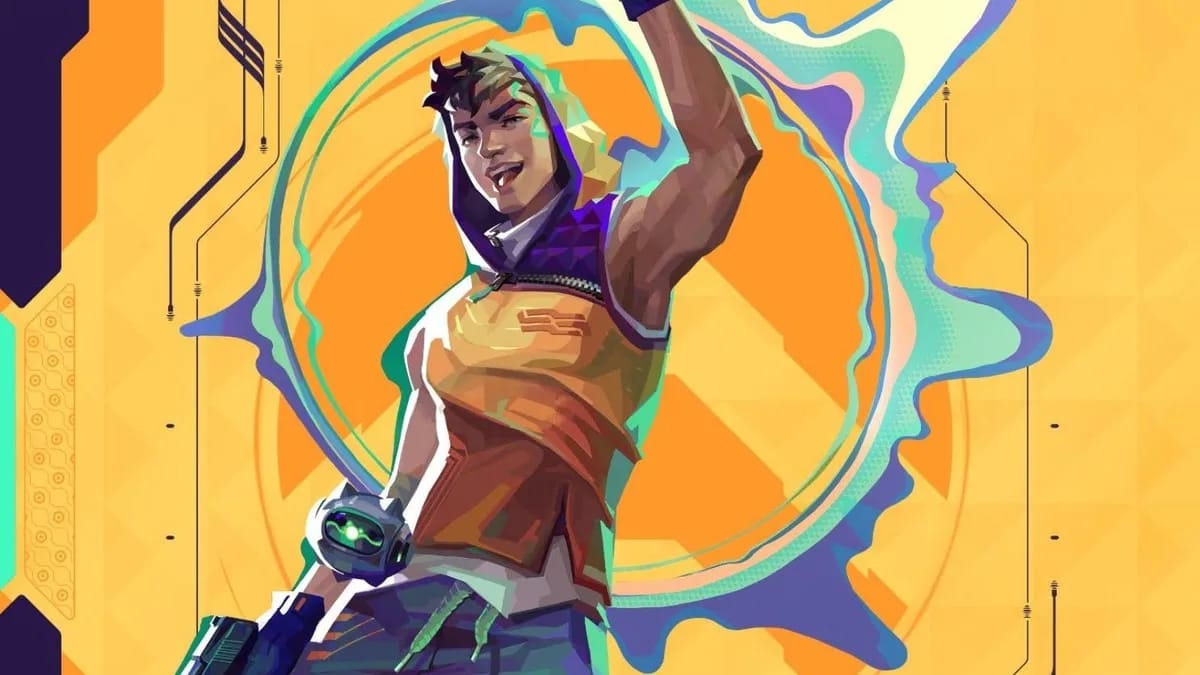
Valorant's 30th agent is live — and Miks has already started reshaping the ranked meta since dropping on March 18 with Season 2026 Act 2 / Patch 12.05. Here's your complete, post-launch breakdown of Miks' Valorant abilities, confirmed in-game stats, and the ranked strategy you need from day one.
Revealed live at VCT Masters Santiago's Grand Final showmatch on March 15, Miks is the first Controller in Valorant history capable of healing allies mid-fight. That's not a small deal — and now that he's been live for two days, we can fill in everything that wasn't confirmed at reveal.
🎵 Who Is Miks?
Miks is a Croatian agent whose entire identity — lore and kit alike — is built around music. Sound is his weapon, his shield, and his identity on the battlefield.
Riot's design notes describe Miks as having a "high-energy, social personality" that reflects music's ability to lift moods and rally a squad. He's not a cold, solo-operator Controller like Omen. He was built for players who find satisfaction in enabling teammates to shine — the kind of player who gets just as hyped watching a teammate pop off as from going off themselves.
He was revealed at the Grand Final of VCT Masters Santiago — won by NS RedForce — one of the biggest stages in the competitive calendar. That placement is a clear signal from Riot that Miks is meant to shake up the highest level of play.
Think of him as a hybrid Controller-Support in practice. He holds smokes and buffs your team and disrupts enemies in ways no other Controller can. His kit rewards communication and coordination above everything else.
🔊 Miks' Full Abilities Breakdown
Now that Patch 12.05 is live, here's the complete, confirmed ability kit — no speculation.
Waveform (E) — Signature Smokes 💨
What it does: Equip a Map Targeter and FIRE to place up to two smoke locations. ALT-FIRE to deploy smokes at all marked locations simultaneously. Two charges, 16-second duration, refreshes on cooldown as his signature ability.
How it works in-game: This is the most flexible smoke kit in Valorant right now. Unlike Astra's global smokes (which require setup time) or Brimstone's orbital UI (which requires map-awareness), Waveform lets Miks pre-mark positions before a round starts, then activate them on-demand mid-round with a single input. No casting delay. No re-positioning required.
Tactical uses:
- Pre-smoke B site before the round starts on Haven, then trigger mid-round when your team pushes
- Hold two smoke locations for late-round retake — activate both at once to reset enemy vision
- Re-smoke after the first set expires — signature cooldown is short enough to cover a full round
vs. Other Controllers: Omen's smokes are renewable and global but have teleport overhead. Brimstone's require map-overlay awareness. Waveform sits cleanly in between — reliable, no repositioning, instant dual-deploy. It's the easiest smoke kit to pick up in Valorant right now.
M-Pulse (C) — The Dual-Mode Wave 🔄
What it does: Equip a throwable device. ALT-FIRE to toggle between two modes before throwing:
- Concuss Mode: M-Pulse emits sound waves that concuss players in range — blurring vision and disrupting crosshair placement
- Healing Mode: M-Pulse emits healing waves, regenerating HP for teammates in range
FIRE to throw. M-Pulse activates on landing and emits its wave. Two charges. Can be destroyed by enemies before or after activation if they shoot it.
Tactical uses:
- Pre-throw M-Pulse in Heal Mode at the spike plant location before your team enters site — your entry fraggers will top off HP as they plant
- Switch to Concuss Mode when defending a 1v1 — the concuss doesn't outright blind like a flash but disrupts enemy aim mechanics significantly
- Use Heal Mode after a chaotic site-take to top off the team before the retake rush
M-Pulse is the ability that separates mediocre Miks players from great ones. The dual-mode flexibility sounds simple in theory, but reading the fight — knowing when your team needs a concuss vs. a heal — requires genuine game sense.
Harmonize (Q) — Combat Stim ⚡
What it does: EQUIP Harmonize and target an ally to activate a Combat Stim on both yourself and that ally. The stim refreshes whenever either player secures a kill. ALT-FIRE activates the stim on yourself only.
What Combat Stim does: Increases movement speed and reduces ability cooldowns while active. The exact duration hasn't been pinned to the patch notes, but in-game testing confirms a noticeable speed boost — enough to swing trades in tight corridors.
Tactical uses:
- Give Harmonize to your entry fragger at round start — first kill refreshes the stim for both of you, creating a snowball chain if your team chains the execute
- Use ALT-FIRE solo stim when you're the last player alive and need the speed boost to avoid or engage
- Stack Harmonize with Bassquake during an execute: slow enemies with the ult, then stim your team to close the gap
The snowball mechanic is massive. If your team chains kills in an execute, Combat Stims stack through refreshes, improving fight momentum across multiple enemies. In a coordinated team, Harmonize can create the kind of unstoppable 3-for-1 exchange that wins rounds outright.
Pick your Harmonize target deliberately. Give it to the player with the best aim — not just whoever is in front. One well-Harmonized Jett or Reyna can carry an entire round.
Bassquake (X) — Ultimate: Sonic Radiance 🌊
What it does: FIRE to build up and unleash Sonic Radiance forward in a cone. The radiance field simultaneously:
- Knockbacks players caught in it — forcing repositioning
- Deafens — removes ability-sound cues from affected players
- Slows — reducing movement speed for the duration
Tactical uses:
Bassquake is a high-pressure ultimate that changes the geometry of a fight rather than dealing damage. That makes it uniquely valuable in coordinated play, where you need to force enemy movement on demand.
- Use Bassquake to interrupt a site execute — the combined knockback and slow breaks enemy timing and pushes fraggers backward out of planted positions
- Combine with Waveform: deploy smokes to block vision, then Bassquake into the smoke to force blind repositioning
- Coordinate with Sage: Bassquake slows enemies into Sage's slow orb zone for a brutal movement lockdown combo
The deafen component is underrated. In clutch situations, removing sound cues (footsteps, reload sounds, ability activations) from your opponent creates an information advantage even when you can't see them.
🤝 How Miks Fits Into Team Compositions
Miks isn't a replacement for Omen or Brimstone. He fills a different niche — and knowing when that niche applies is the key to getting value out of him.
Best team synergies:
- Jett or Reyna (entry fraggers): Harmonize targets. Give them the stim, let them snowball with aggressive plays, and you enable both of them while holding smokes
- Sage: M-Pulse healing + Sage healing = the most sustain-heavy team composition in current Valorant. Stack this on maps where gunfights are inevitable (Bind, Icebox)
- Killjoy or Cypher (Sentinels): Bassquake slows enemies into Killjoy's Lockdown or Cypher's trip zones. You provide displacement, they provide control — clean division of labor
Maps where Miks performs best:
- Bind: Long sightlines on both sites reward Waveform's pre-set smoke flexibility. Bassquake in Hookah is brutal.
- Haven: Three-site maps demand versatile smoke placement. Miks handles two sites with Waveform while your team rotates
- Pearl: Mid-control is everything on Pearl. Miks pre-smokes mid, activates on demand, then Bassquake forces enemies off Art or Mid Upper
Track how Miks performs at the highest levels on the Amber.gg Leaderboard — once pick rates stabilize in Week 1 of Act 2, the data will tell you where he's genuinely OP vs. just popular.
🏆 Ranked Tips — Your First Games on Miks
The first week of a new agent is the best time to learn them. Most players have never played against Miks — which means they haven't learned to shoot M-Pulse, anticipate Waveform deploys, or dodge Bassquake.
When to pick Miks:
- Your team already has a Duelist and an Initiator — Miks adds the Controller slot with bonus support
- You're playing Bind, Haven, or Pearl where pre-set smokes shine
- Your team communicates — Harmonize and M-Pulse Heal Mode require callouts to use effectively
- You want to win rounds through enabling, not fragging
When NOT to pick Miks:
- Your team has zero fraggers — Miks doesn't create kills, he multiplies existing fragging
- Solo-queue with no comms — Harmonize wasted on a teammate who doesn't call when to engage is a liability
- Maps where global or renewable smokes dominate (Omen on Ascent, Brimstone on Split)
Synergy tips for your first sessions:
- Mark your smoke positions verbally in team chat at the start of each round — "I have smokes on B main and B elbow" reduces confusion
- Keep M-Pulse in Heal Mode by default on pistol rounds — the cost delta is meaningless early-round but sustain wins pistol fights
- Bassquake costs 8 points. Save it for post-plant situations or site-execute interrupts — don't waste it on 1-2 enemies in open space
- If you're unsure on Harmonize target: give it to whoever already has kills that round. The stim refreshes, they snowball, you win the number game
Counters to know:
- Sage: Wall can cut Bassquake's cone path. Position on elevated terrain to negate knockback.
- Sova: Drone reveals M-Pulse placement before activation. Always delay throw until Sova drone is burned.
- Cypher: Tripwires punish the speed Harmonize stim encourages. Watch corners when stimmed.
📈 Meta Impact — Miks in Competitive Play
Patch 12.05 didn't just add Miks — it reshaped the entire Controller meta with targeted nerfs.
Yoru got hit hard:
- Gatecrash duration: 30s → 15s — cuts his repositioning and bait windows in half
- Blindside charges: 2 → 1 per round — eliminates his ability to double-flash and instantly trade
Yoru was crowding out flash Initiators and Sentinels at higher ranks and in Pro play. With Blindside halved, he's significantly less dominant as a solo-carrier pick. Miks fills adjacent utility space (movement disruption via Bassquake vs. Yoru's deception), but plays cooperatively rather than duelingly.
Clove also took nerfs:
- Ruse smoke duration while dead: 14s → 6s — her post-death map control is nearly eliminated
- Meddle area of effect: 6m → 4m — the debuff zone is 30% smaller
This directly benefits Miks. Clove was the previous "Controller with non-standard utility" pick. With Clove weakened, Miks is now the fresh, untuned alternative — expect his pick rate to spike in Diamond+ as players migrate.
Skye got a buff:
- Guiding Light: new 60-second cooldown allows multiple flash deployments per round with planning
This makes Skye a stronger pair with Miks. Miks controls vision and space with smokes; Skye provides flashes and info. Together they form a smoke-flash combo that historically dominates site execution in competitive Valorant.
Map pool changes: Abyss and Corrode exit competitive. Lotus and Fracture return. This is relevant for Miks — Lotus suits his kit well with its complex site layouts and multiple choke points.
VCT Stage V26A2 begins March 18 — meaning pro teams have exactly as much time as you do to figure out Miks. He'll be competition-legal immediately. Check the Valorant Act 2 2026 meta guide for the full agent tier list as the meta develops.
For the full Act 2 breakdown including MMR overhaul and ranked changes, read Valorant Act 2 Season 26: Everything Changing.
🎯 Is Miks Worth Learning?
Miks introduces something genuinely new to Valorant: healing in the Controller role. No other Controller has done it before, and it fills a gap that teams have been plugging with off-meta Sage picks for years.
With Clove and Yoru nerfed in Patch 12.05 and the map pool shifting toward Lotus-friendly layouts, Miks enters the meta at exactly the right time. If the ranked meta shifts toward longer gunfights and sustain-heavy team comps, Miks becomes a top-tier pick. If the meta stays fast and burst-damage-heavy, he'll be a strong niche pick on specific maps.
Either way, learning him during the first week of Act 2 — before the counter-meta develops — is the smartest move. His floor is "reliable Controller with standard smokes." His ceiling is "round-winning team enabler who keeps allies alive and entry fraggers permanently stimmed."
The gap between floor and ceiling depends entirely on how much you communicate.
Ready to compete? Jump into Valorant ranked ladders on Amber.gg and put your Miks games to the test against the best players in your region.