

How to Make Money Playing Valorant in 2026: 5 Real Ways
Making money from Valorant is possible at any rank, but only a few routes pay a normal ranked player, and some popular ones get your account banned. Here is every honest option in 2026, what each one really takes, and where to start.
How to make money playing Valorant comes down to five legit routes: paid skill-based ladders, Premier and the Riot circuits, coaching, streaming, and video content. They pay very differently 🎯. A ladder can pay out after your first week of ranked games, the pro path needs a five-stack of Immortal-level players, and content takes months before the first dollar. This guide ranks every route for a normal ranked player, then covers the shortcuts that get accounts banned.
🎯 Can you make money playing Valorant? The short answer
- Yes, at any rank, through paid ladders that score the ranked games you already play.
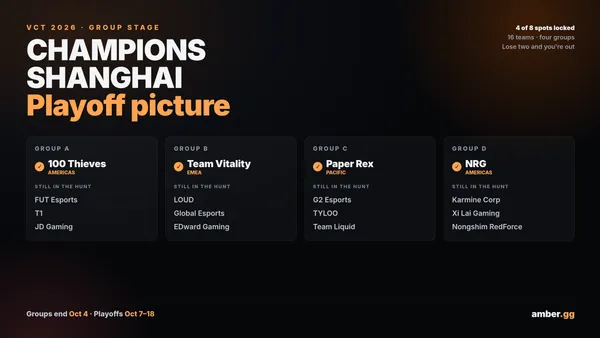
- Premier and the VCT qualifiers pay teams, not solo players, and the money sits at the very top of the divisions.
- Coaching pays once you are clearly above your students and can explain why a round was lost.
- Streaming and videos pay slowly: on Twitch, anyone can now receive Bits and subs, but payouts start at Affiliate.
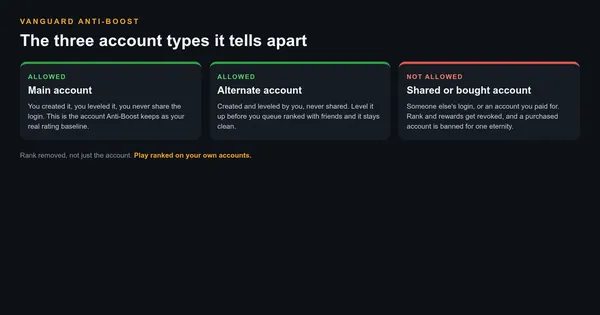
- Boosting, selling accounts and sharing accounts break Riot's terms and end in rank removal or bans.

1. Paid skill-based ladders: earn money from your ranked games
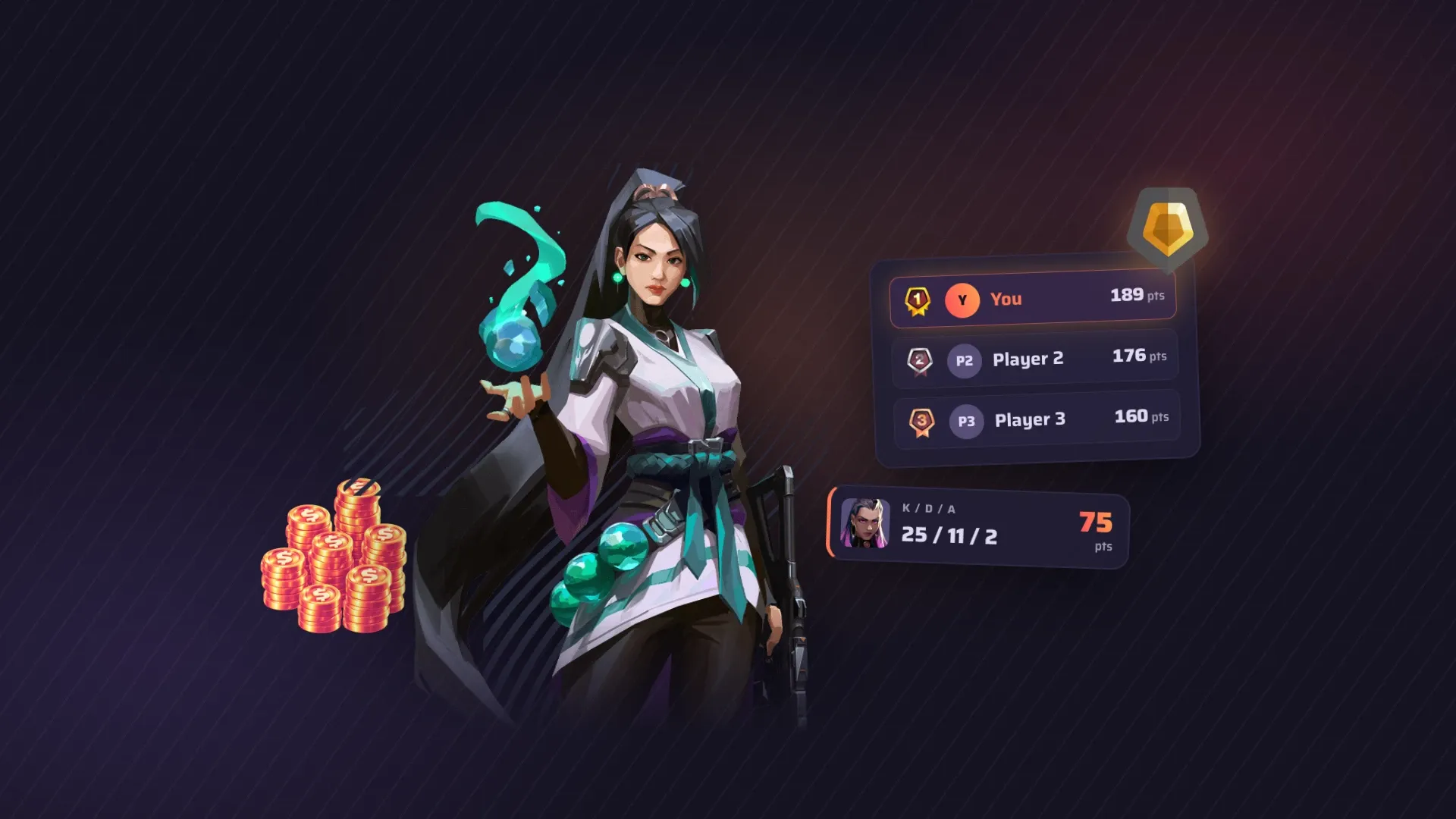
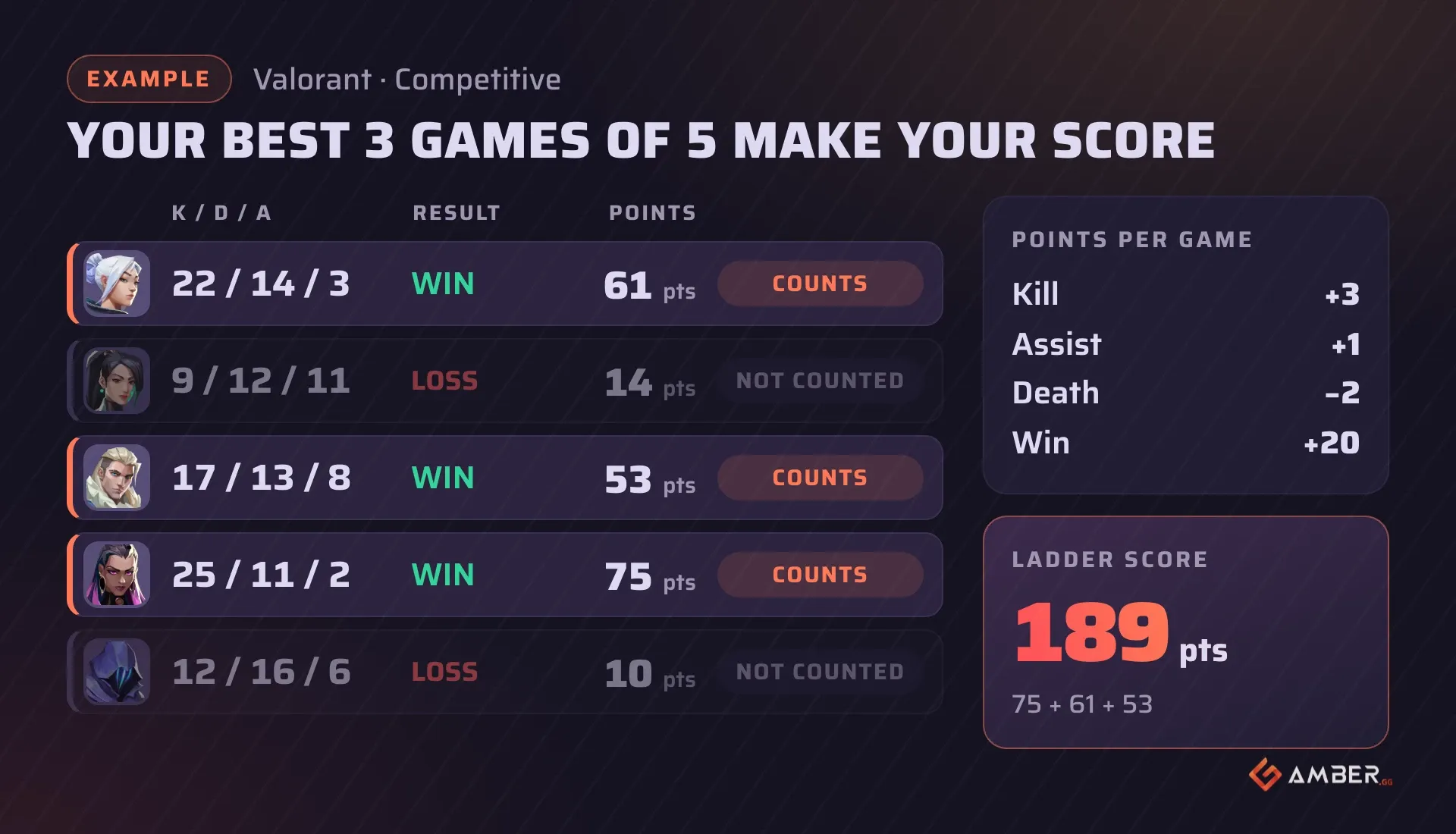
A paid ladder turns a stretch of normal games into a competition. You pay an entry fee, play your matches in the ladder's queue while it runs, and your score comes from the objectives the ladder lists, read from your match stats. When the ladder ends, the top of the standings splits the prize pool 💰.
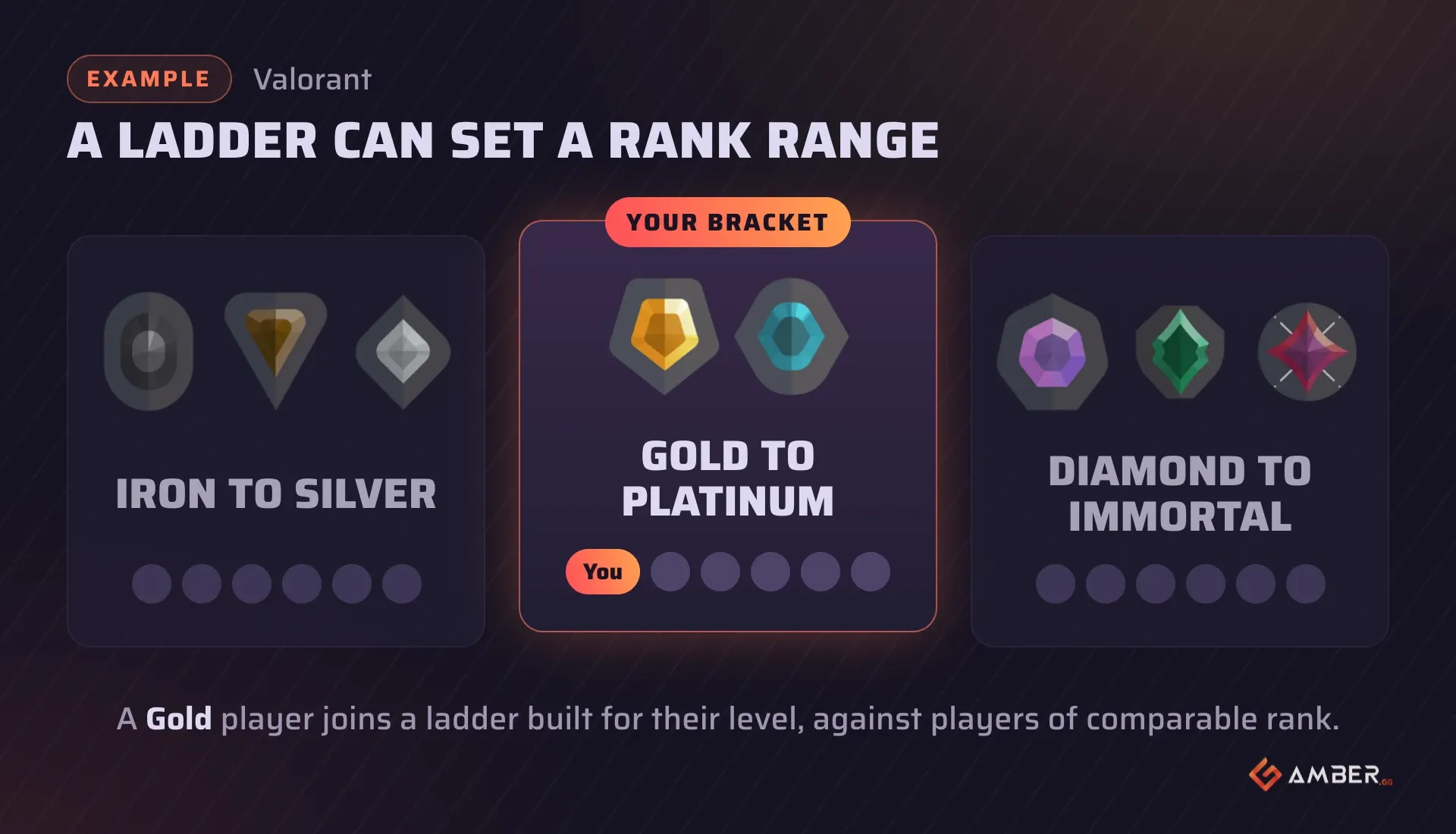
On Amber.gg, Valorant ladders count Competitive games by default, and some use Unrated or Swiftplay. A ladder can set a rank range, so a Gold player can pick one built for their level instead of facing Immortals. There is no fixed match time and no team to organize: you link your Riot account once, and the games you play in the ladder's queue count toward your score.
Play Valorant and earn money: what a ladder really looks like
- You compete against the other entrants of that ladder, not the whole server. Reaching the paid places means outscoring them over the ladder's window.
- You see what is on the line before you join: the ladder shows its prize pool and the payout of each place, so you know what a top finish pays.
- Your entry fee comes back if you leave before the start, or if the ladder starts without enough players.
- Some ladders take tickets instead of money. You earn tickets by playing through the Battle Pass, which makes them a free way to learn the format.
- New accounts get a $5 welcome bonus in game credit after a first qualifying deposit. Game credit pays for entries but cannot be withdrawn.
Getting your winnings out
Winnings land in your wallet. Withdrawals go in whole steps of $10 from $30, plus a $1 fee on top, so a $30 withdrawal takes $31 from your balance. Identity verification is required to withdraw, and withdrawals are capped on rolling 7-day and 30-day windows.
For formats, entry options and a step-by-step first ladder, read our guide to Valorant cash prize competitions. For the mechanics behind every game, from prize pools to fair brackets, start with how paid gaming competitions work.
Who it fits: any rank, as long as you already queue several times a week.
Includes Riot Games artwork.
2. Premier and the Riot circuits: the path to pro prize money 🏆
Premier is Valorant's in-game team mode and the first step of Riot's path to pro. It pays no cash on its own: the money starts once a team climbs out of it into Riot's pro circuit.
- Divisions, then promotion. Teams climb Premier's divisions Act after Act. Since June 2024 the top tier is the Invite Division, which Riot built to promote teams into Challengers, the leagues below the VCT.
- A high bar. When Riot made Premier the road to Challengers in early 2024, its Contender division asked every player for Immortal 3 or higher and an age of at least 16.
- A wider door from 2027. Every Masters and Champions starts with online open qualifiers that any team in the world can enter. Premier is one of several qualification routes, and prize pools across the circuit pass $6 million a year. Our breakdown of the VCT 2027 format covers the Cups and the Kickoff.
Realistic take: this route pays a team, not a player, and only near the top. Play Premier for the experience and the scouting, not for income, unless your whole five-stack sits at Immortal or above.
3. Coaching: monetize your Valorant skills by teaching
Coaching is the most direct way to monetize your Valorant skills without playing for a result. Players pay for VOD reviews, live sessions and role-specific advice, usually from someone a few ranks above them.
- Your rank opens the door, your teaching keeps clients. An Ascendant who explains crosshair placement and utility timing clearly can coach Silver and Gold players well.
- Show how you think. Commented VODs of your own games prove more than a rank badge.
- Build reviews first. A few cheap or free sessions with players from your Discord or socials give you the first testimonials.
- Never log into a client's account to play for them. That is boosting, and Riot's terms ban it.
Who it fits: Platinum and above, if you enjoy explaining the game more than playing it.
4. Streaming: the slow road to subs, Bits and ads
Riot's content policy lets you earn from Valorant streams through ads, donations and subscriptions, as long as non-subscribers can still watch the games. Since May 2026, every Twitch streamer can receive Bits and subs, but only Affiliates and Partners get paid out, once their balance reaches $50. Since June 2026, Affiliate asks for all of these at the same time, within a rolling 30-day window:
- 25 followers
- 4 hours streamed
- 4 different broadcast days
- An average of 3 concurrent viewers on 4 of those days
The bar is lower than it used to be, but the viewer average is still the hard part for most new channels, so treat streaming as a long-term project, not income from month one 📺.
5. Video content: guides, clips and shorts
Videos fall under the same Riot policy: ads and sponsor overlays are allowed, while putting your content behind a paywall or crowdfunding it needs a written licence from Riot. Guides, lineups, rank-up challenges and clips work at any rank when the angle is useful to other players. Like streaming, it pays through the platform's own programs once your channel has an audience.
🚫 What does not work, or breaks Riot's terms
Riot's Terms of Service, last modified on December 1, 2024, close the usual "easy money" ideas:
- Boosting. Playing on another person's account, or any activity meant to boost an account's rank, is listed as prohibited behavior. The boosted account loses the rank too.
- Selling or sharing accounts. You can't share, sell or transfer your account or your login, or offer to.
- Selling skins or items for cash. In-game content can't be redeemed for real-world money.
Riot enforces this. Since September 17, 2026, Vanguard Anti-Boost removes rank earned on a handed-over account, and our guide to what Vanguard Anti-Boost removes lists what stays allowed, like alternate accounts you leveled yourself.
🧭 Which route fits your rank?
- Iron to Gold: paid ladders with a rank range that matches yours, ticket ladders to learn the format, and content if you enjoy making it.
- Platinum to Ascendant: ladders, plus coaching for lower-ranked players.
- Immortal and Radiant: everything above, plus Premier's top divisions and, from 2027, open qualifiers with a team.
Includes Riot Games artwork.
How does Valorant make money?
If you searched this to understand Riot's side: Valorant is free to play, and Riot earns from Valorant Points, the premium currency players buy for weapon skins and the premium battle pass. Those purchases stay in the game, since Riot's terms say they can't be turned back into real money.
Also play League of Legends?
The same routes exist in LoL, with ladders built on your League games. Our guide on how to earn money playing League of Legends covers them.
🏆 Start with the route that pays this week
Coaching and content take months to build. A ladder only needs the ranked games you were going to play anyway. Pick a Valorant ladder at your level on Amber.gg and see how your next week of games scores.